The air in Bedford was crisp, the kind that clings to your skin and makes you feel like something is about to happen. Not the kind of chill that bites, but the kind that stirs. On Columbus Day, a crowd gathered at Murphy’s Taproom and Carriage House, not for beer or football or the usual Monday lull. They came for something else. Something louder. Something called “unwoke.” A celebration, they said. Of history. Of tradition. Of Christopher Columbus.
The word itself, unwoke, hung in the air like a challenge. A provocation. A signal. It wasn’t just about Columbus. It was about the stories we tell, the ones we erase, the ones we fight to keep. The event, organized by the New Hampshire Federation of Republican Women and the Pine Tree Institute, drew candidates, former officials, and conservative voices from across the state. They spoke of legacy. Of courage. Of discovery. They spoke of a man who sailed west and landed in myth.
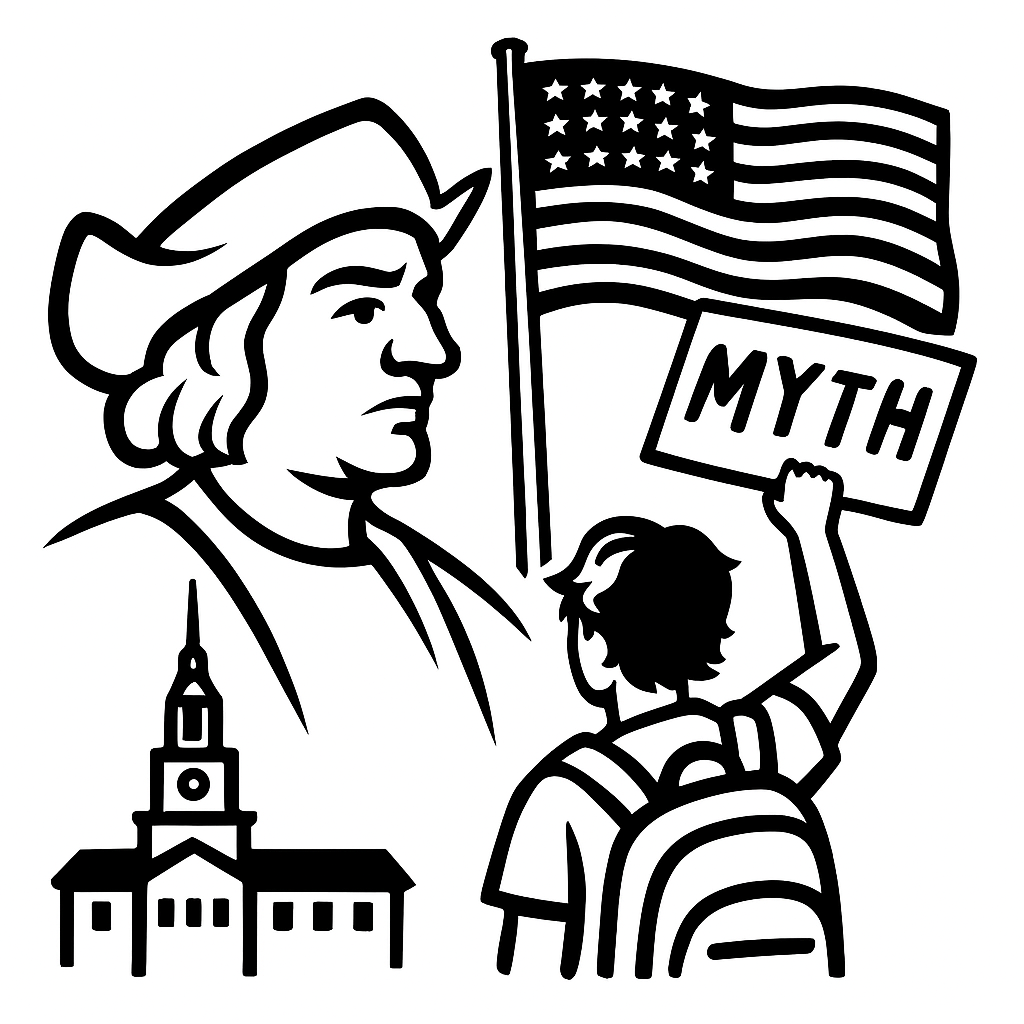
But the myth is cracked. We know this. We’ve read the accounts. The violence. The conquest. The erasure. Columbus is not just a name. He is a symbol. And symbols are slippery. They change depending on who’s holding them. For some, he is a hero. For others, a colonizer. For the people in Bedford that day, he was something else entirely, a rallying point. A figure to reclaim. A way to push back against what they called “cancel culture.”
The speeches were fiery. Tim McGough, a state senator, spoke of determination. Hollie Noveletsky, a business owner and congressional candidate, spoke of vision. Scott Brown, former senator and ambassador, invoked patriotism. Lily Tang Williams, another congressional hopeful, spoke of freedom. The words came fast. They came hard. They came with conviction. And beneath them, a current of resistance. Not just to historical revisionism, but to a broader cultural shift. A shift that feels, to some, like erosion.
“We’ve all seen how, year after year, bit by bit, our history and our traditions and our culture and common sense itself are being chipped away at,” one speaker said. The crowd nodded. Applauded. Some cheered. It wasn’t just about Columbus. It was about holding on. To something. To anything. To a version of America that feels like it’s slipping.
Outside, the leaves were turning. Red, gold, brown. The kind of palette that makes you think of endings. Of change. Inside, the mood was defiant. The event began with a reading of President Trump’s Columbus Day proclamation. It was ceremonial. Reverent. A gesture toward a past that many in the room felt was under attack. There was no mention of Indigenous Peoples Day. No acknowledgment of the pain that Columbus’s legacy carries. That was not the point.
The point was to draw a line. To say: this is ours. This story. This man. This day. And we will not let it go. It’s a sentiment that echoes beyond Bedford. Across the country, debates over monuments, holidays, and historical figures have become battlegrounds. They are not just about facts. They are about identity. About power. About who gets to decide what we remember.
In the art world, we talk about negative space. The parts of a canvas that are left blank. The silence between notes. The pause before a brushstroke. History has its own negative space. The stories we don’t tell. The voices we don’t hear. The truths we don’t want to face. Columbus lives in that space. And so does the resistance to reimagining him.
I think about the way my mother taught me to draw. Start with the outline, she said. Then fill it in. But what if the outline is wrong? What if the shape itself is flawed? Do you erase it? Do you redraw? Or do you keep going, knowing the image will never be quite right? That’s what this feels like. A country trying to redraw itself. And a crowd in Bedford saying: no. We like the old lines.
There’s something deeply human in that. The desire to hold on. To preserve. To protect. Even when the thing we’re protecting is complicated. Messy. Painful. Columbus is not simple. He never was. But simplicity is comforting. It’s easier to celebrate a man than to confront a legacy. Easier to wave a flag than to sit with discomfort.
The event ended with music. Patriotic. Familiar. The kind that makes you stand a little straighter. The kind that makes you remember. Or forget. Depending on who you are. Outside, the sun was setting. The crowd dispersed. The signs came down. But the message lingered. Unwoke. A word that means nothing and everything. A word that says: we are still here.
In the days that followed, the headlines came. The critiques. The praise. The arguments. But the people in Bedford had already spoken. They had drawn their lines. They had made their choice. And whether you agree or not, you have to listen. Because history is not just what happened. It’s what we say happened. And who gets to say it.
I think about that a lot. As a journalist. As an artist. As someone who straddles cultures. Who lives in the in-between. I think about the stories we inherit. The ones we rewrite. The ones we refuse to let go. Columbus Day in Bedford was not just a celebration. It was a declaration. And declarations, like brushstrokes, leave marks. Whether you see them or not. These debates about expression and meaning echo similar discussions about Dartmouth’s free expression policies, where the question of who gets to speak and be heard remains central to campus life.