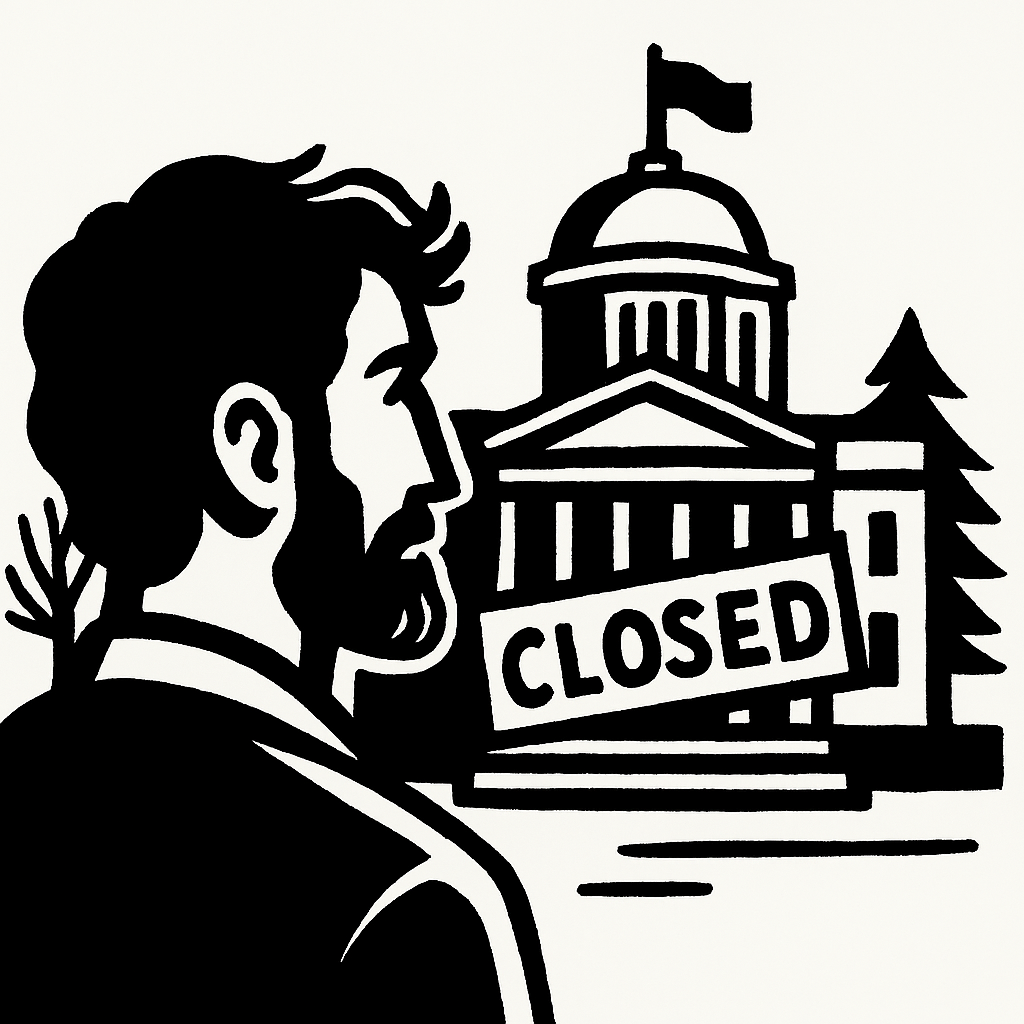
The leaves are turning in New Hampshire. Gold, rust, and that deep red that feels like memory. Tourists drift through the White Mountains, chasing foliage like it’s a promise. But the promise is fraying. Somewhere between the trees and the Capitol, something has snapped. The government has shut down. Again. And this time, the silence feels heavier. Not dramatic. Just dull. Like a door that won’t open. Like a paycheck that doesn’t come.
October began with a pause. Not the kind that invites reflection, but the kind that interrupts. At 12:01 a.m., the federal government stopped moving. Not entirely. Essential services, air traffic control, Social Security, the mailM kept breathing. But everything else? Held its breath. In New Hampshire, more than 5,000 federal workers felt the shift. Some were told to stay home. Others kept working, unpaid. The Portsmouth Naval Shipyard. The VA Medical Center in Manchester. The forest rangers in the White Mountains. All caught in the same limbo. Work without wages. Purpose without support.
The shutdown isn’t just a political standoff. It’s a slow erosion. A quiet unraveling. School districts are staring down a $30 million health bill. Insurance premiums are rising, even as subsidies hang in the balance. Organizations that help people navigate the healthcare marketplace are cutting staff, scaling back. The safety net is thinning. And the people who need it most are watching it fray.
Head Start programs. Food assistance. Heating aid. These aren’t abstract concepts. They’re lifelines. And while some benefits are scheduled through October, the future is murky. If the shutdown stretches, those lifelines could snap. The state says it can hold out for 30 days. Maybe. But after that? No one’s sure. The uncertainty is its own kind of harm. It settles into routines, into conversations. It makes people cautious. Makes them wait.
In the White Mountain National Forest, the trails remain open. For now. But the offices are quiet. Rangers furloughed. Visitor services shuttered. It’s leaf-peeping season, and the forest is full. But without staff, trash piles up. Questions go unanswered. Maintenance stalls. Scientific research pauses. Restoration projects freeze. The forest breathes, but no one’s listening. Amy Lindholm from the Appalachian Mountain Club says the shutdown comes after deep staff cuts. Expertise lost. Momentum stalled. The forest is still there, but the care it needs is missing.
At airports, the rhythm continues. Flights take off. Land. Security screeners and air traffic controllers remain on duty. But they’re not being paid. And that tension builds. If the shutdown lingers, delays could stretch. Wait times could grow. The system relies on people showing up. Even when the system doesn’t show up for them.
The fight in Washington is about health policy. About funding. About control. Democrats want to protect healthcare subsidies. Republicans say there’s time to negotiate later. But later doesn’t help the school nurse trying to explain rising costs. Doesn’t help the family wondering if their SNAP benefits will last. Doesn’t help the federal employee checking their bank account, knowing it won’t change.
Governor Kelly Ayotte says the state can manage. That operations can withstand a short shutdown. But resilience isn’t infinite. And the people on the ground know that. They feel it in the small things. In the delay of a passport. In the absence of a park ranger. In the quiet of an office that should be open. The shutdown isn’t loud. It’s subtle. It’s in the spaces where something used to be.
There’s a kind of grief in it. Not dramatic. Not cinematic. Just the slow realization that systems are fragile. That support can vanish. That the machinery of government, when it stops, leaves people exposed. Vulnerable. And in New Hampshire, that vulnerability is layered. It’s economic. Emotional. Environmental. It touches the forest, the classroom, the kitchen table.
The shutdown is a mirror. It reflects the fractures. The places where policy meets reality. Where ideology meets need. And in that reflection, New Hampshire sees itself. Not as a battleground. Not as a headline. But as a place where people live. Work. Hope. And right now, wait.
The leaves keep falling. The forest keeps breathing. The people keep showing up. Even when the government doesn’t. And maybe that’s the story. Not the shutdown itself, but the persistence around it. The quiet resilience. The way New Hampshire holds its shape, even as the scaffolding shakes.
October is a month of change. Of color. Of transition. And this year, it’s also a month of pause. A month where the systems falter, but the people don’t. Where the forest waits. Where the workers wait. Where the state waits. And in that waiting, something else begins. Not resolution. Not clarity. But a kind of endurance. A kind of rhythm. A kind of hope.