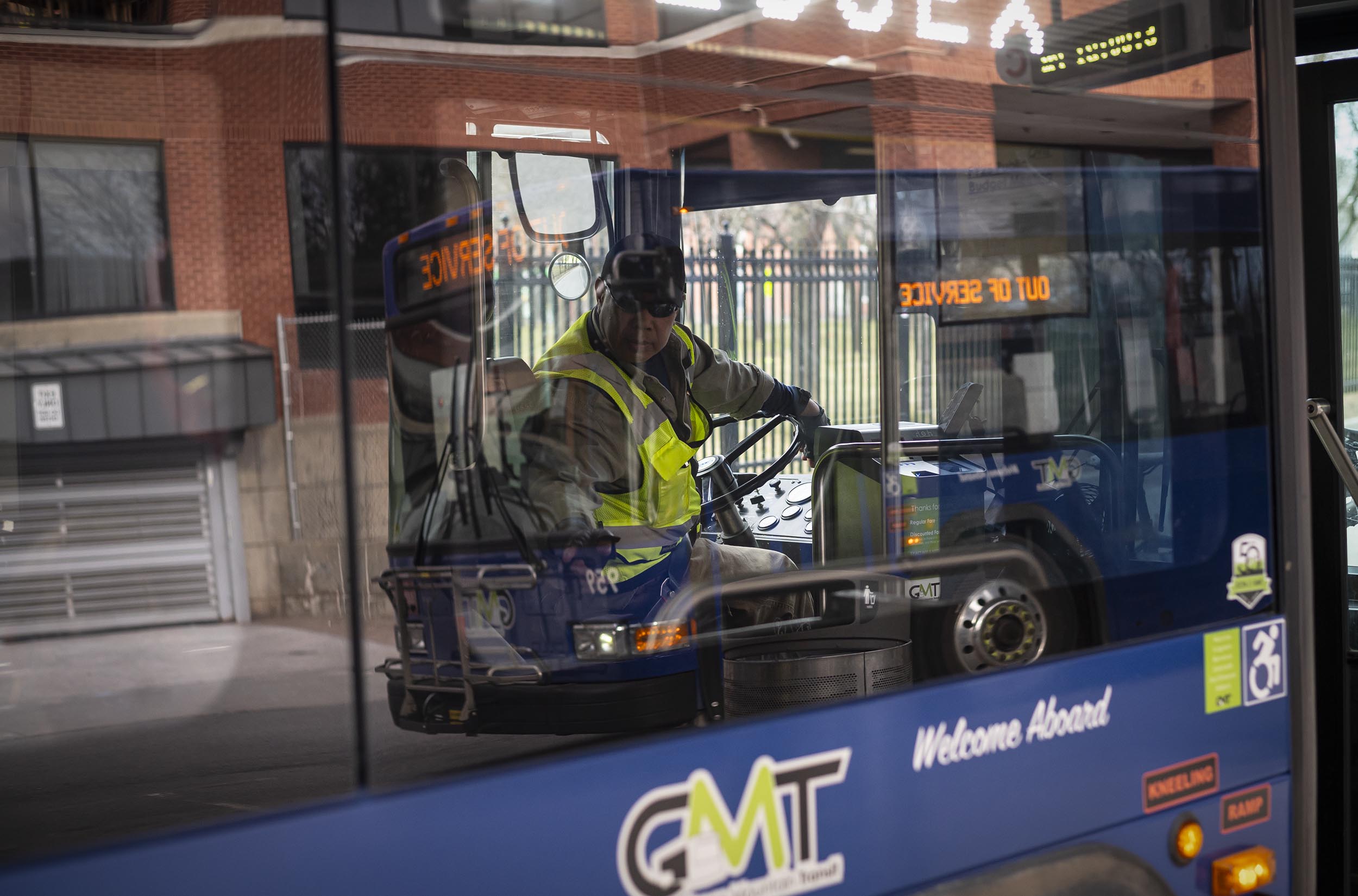
Green Mountain Transit’s board of commissioners is set to vote Tuesday on scrapping its No. 4 bus route, a move that would strand fewer than 1,000 monthly riders in Essex Junction and Essex Town with no comparable alternative.
The Burlington-based agency’s general manager, Clayton Clark, said cutting the route would save $112,000 annually and free up drivers and vehicles for lines that carry more passengers. It’s a straightforward calculation on a spreadsheet. It’s a lot harder for the people who ride it.
The vote doesn’t happen in isolation. Green Mountain Transit has already trimmed the equivalent of 20% of its service across Chittenden County since late 2024, cuts that saved $2 million per year. But the financial pressure hasn’t eased. Inflation keeps pushing operating costs up. The war in Iran is likely to drive fuel prices higher still, Clark said. And the pandemic-era federal relief money that once papered over the agency’s structural deficits is mostly gone now, with nothing from the state or federal government filling that hole.
Absent new revenue, Clark said, Green Mountain Transit is looking at a projected $2.5 million shortfall for fiscal year 2028, which begins in July 2027. Nothing beyond the No. 4 route has been formally put on the chopping block yet, but more cuts could come.
The Essex route’s numbers don’t look great. It costs roughly $28 per passenger per trip to operate, against an agency-wide average of $7. That gap is why it’s on the table. But the cost-per-rider figure doesn’t tell you what happens to the person who misses a dialysis appointment because the bus stopped running.
Nate Bergeron, a shop steward for the agency’s driver union, spoke to VTDigger about where he thinks this is all heading.
“All these things combined are going to lead to dramatic service reductions and cuts,” Bergeron said Wednesday, “which is going to make it even harder for people to get to the doctors’, and the pharmacies, and the dentist and the grocery stores.”
That’s not a hypothetical fear. Public health researchers have documented for years what happens when transit access declines in rural and suburban communities: the people left behind are disproportionately older adults, people with disabilities, and low-income workers who don’t own a car or can’t afford to keep one running. The American Public Transportation Association has tracked this pattern nationally, and it holds in Vermont just as reliably.
Clark said Green Mountain Transit’s on-demand services are seeing growing demand from exactly those populations, even as the agency’s capacity to meet that demand shrinks. No drivers have been laid off during this stretch of cuts. The workforce has gotten smaller through attrition, Bergeron said. But Clark didn’t rule out layoffs if the agency’s finances keep deteriorating.
Friday’s board meeting, if it proceeds as scheduled before Tuesday’s vote, is expected to include public comment. The No. 4 route connects The Essex and surrounding areas to the broader Chittenden County network. For riders without cars in Essex Junction and Essex Town, it’s often the only option that doesn’t require borrowing a favor.
The 2026 cuts, the projected 2028 shortfall, the $28-per-ride cost figure that keeps appearing in budget presentations: none of it is specific to Vermont. Rural and suburban transit agencies across the country are running the same math, reaching the same conclusions, and asking the same unanswered question about where replacement funding is supposed to come from.
Clark hasn’t said publicly what comes after the No. 4 route if the shortfall holds. He has said the agency won’t make it to fiscal year 2028 without significant new revenue. The board votes Tuesday.
Written by
Dartmouth Independent StaffContributing writer at The Dartmouth Independent
View all articles →